


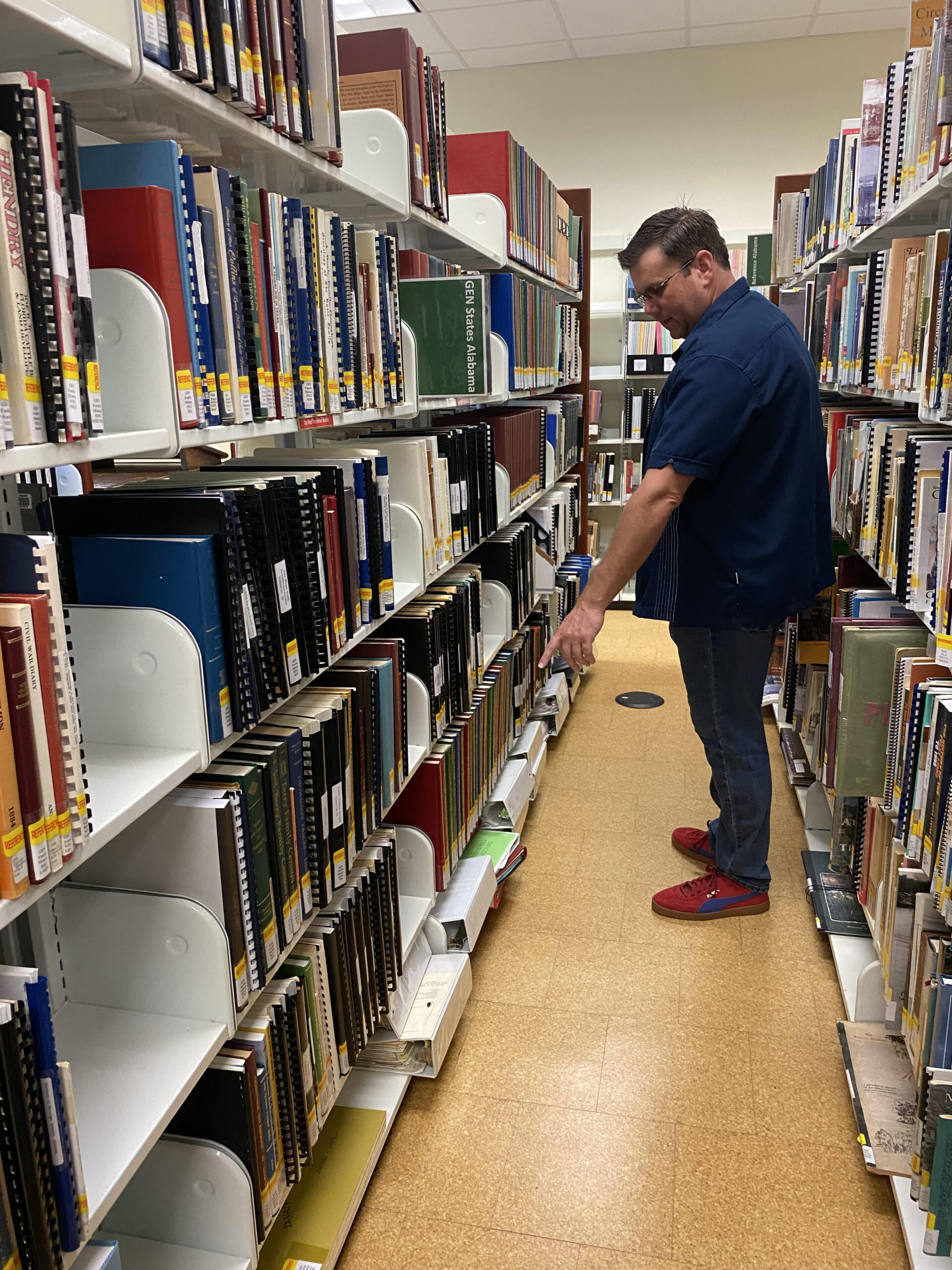


FOLEY – A key department at the Foley Public Library, dedicated to preserving and sharing the city’s past, has a new name that better reflects its growing role in the community.
Formerly known as the History and Genealogy Division, the department is now called the Cultural and Heritage Collection. This updated name highlights the broad range of resources available to residents, researchers, and visitors interested in Foley’s history—not just family trees.
Paul Leonard, who leads the collection, said the change was needed to reflect the department’s full scope.
“Genealogy implies that we only build family trees,” Leonard said. “We’re happy to help with that, but the collection goes far beyond. We have resources covering local, regional and even state history.”
The Cultural and Heritage Collection includes books, documents, newspaper archives, maps, photographs, and digital resources. Visitors can explore their family histories, examine old newspaper stories, or view images of Foley dating back more than 100 years.
A Broader View of History
The collection’s holdings cover far more than individual genealogies. One example is the Heritage Series, a multi-volume set that includes contributions from families in every Alabama county. The department also maintains extensive files on historic buildings, communities, and landmarks throughout Baldwin County.
One ongoing project is a historic building survey of downtown Foley. Leonard is creating a database organized by address that includes photos, articles, and other materials about each structure.
“People often ask, ‘What did my building used to be?’” Leonard said. “This database helps answer those questions. It’s a living resource that continues to grow with community input.”
A recent addition to the database was a photograph of the former Blue Heaven Service Station, once located at East Violet Avenue and North McKenzie Street. A resident shared the image through the library’s Facebook page, allowing the team to preserve it digitally for future researchers.
Tools for Preservation and Access
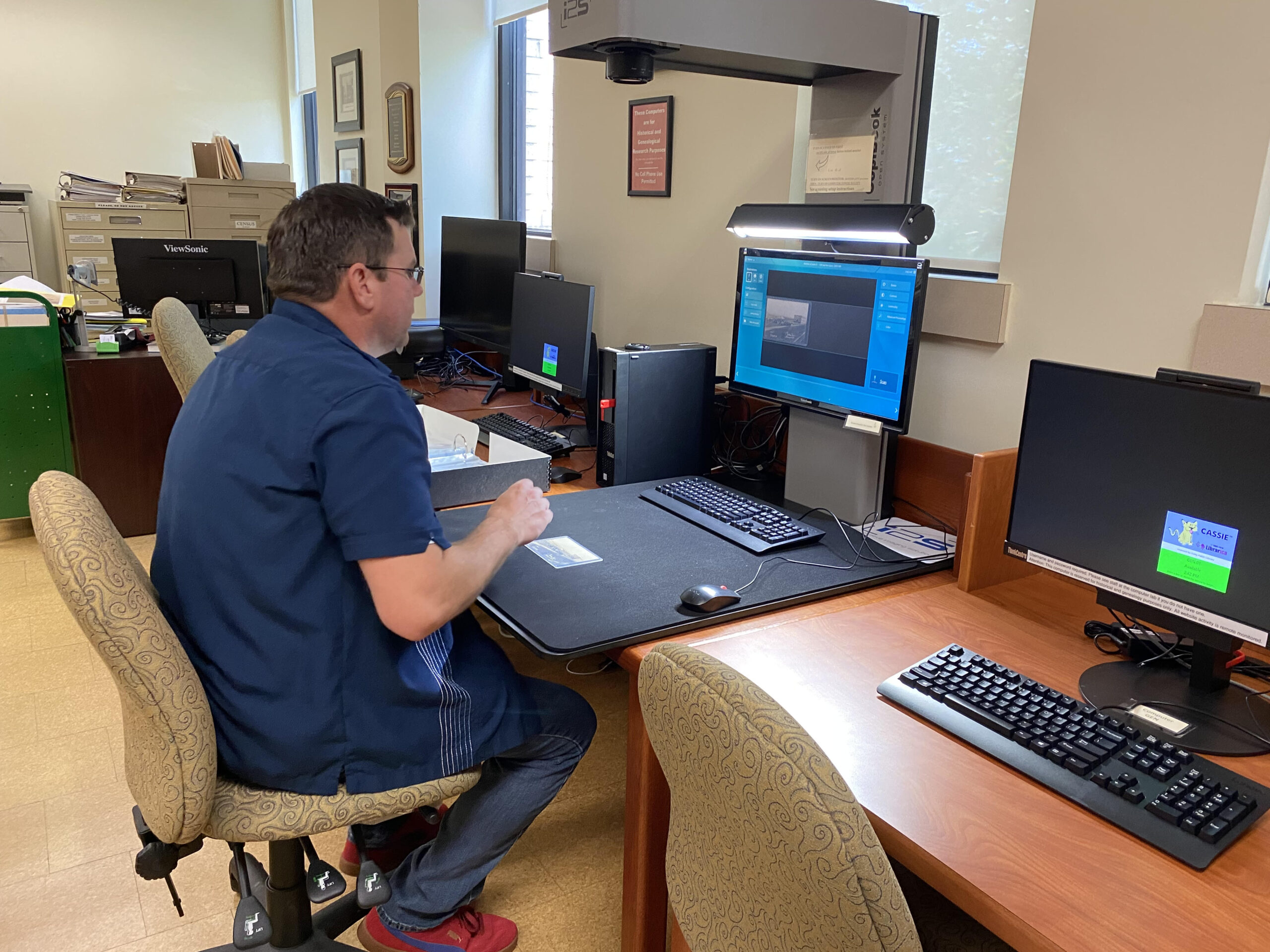
The department offers advanced scanning equipment for public use, including an i2S Optibook Scanner, a professional-grade device also used by national institutions. Other equipment includes:
-
A large-format scanner for posters and oversized images
-
The ViewScan 4 microform reader—unique in the tri-county area—which allows users to view and digitize microfilm, microfiche, slides, and photographic negatives
The ViewScan has proven especially useful for veterans needing access to military records stored on microfiche for VA benefits and documentation.
Extensive Local Archives
The library’s microfilm collection includes issues of The Onlooker from 1910 to April 2009, along with portions of other historic newspapers like The Fairhope Courier and The Baldwin Times.
In addition to physical materials, the library provides free access to genealogy platforms such as Ancestry Library Edition and Fold3 on public computers. More than 13,500 physical titles are housed in the collection, including research and obituary files tied to Baldwin County’s families and communities.
Staff with Deep Local Roots
The department is led by Paul Leonard, a South Baldwin County native and local history enthusiast. He began his work in public history as a volunteer interpreter at Fort Morgan and later spent over a decade in historical research and museum operations. Leonard joined the Foley Public Library in 2019 and took over the department in 2024. He also serves on the Baldwin County Historical Development Commission.
Assisting him is Jeanette Bornholt, a former department director who now works part time. A native of Elberta, Bornholt is a respected expert in genealogy and local history. She has taught numerous workshops, is a lifetime member of the Baldwin County Genealogical Society, and previously served on the Baldwin County Historical Development Commission. She is also an award-winning artist.
The Cultural and Heritage Collection continues to grow as a valuable resource for anyone interested in the people, places, and stories that have shaped Foley and Baldwin County. Visitors are welcome to explore the collection in person or reach out to staff for help with research projects.