


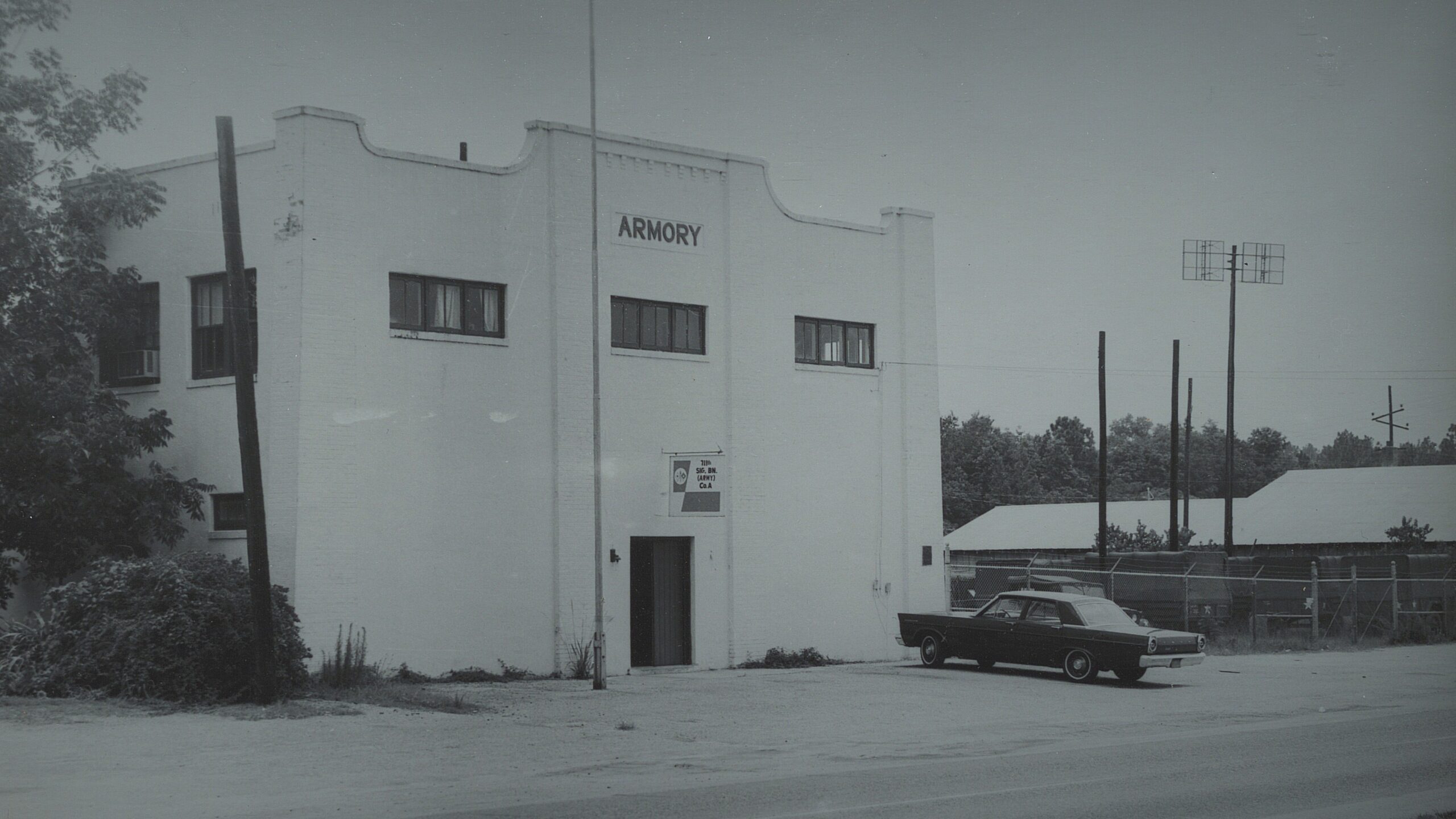
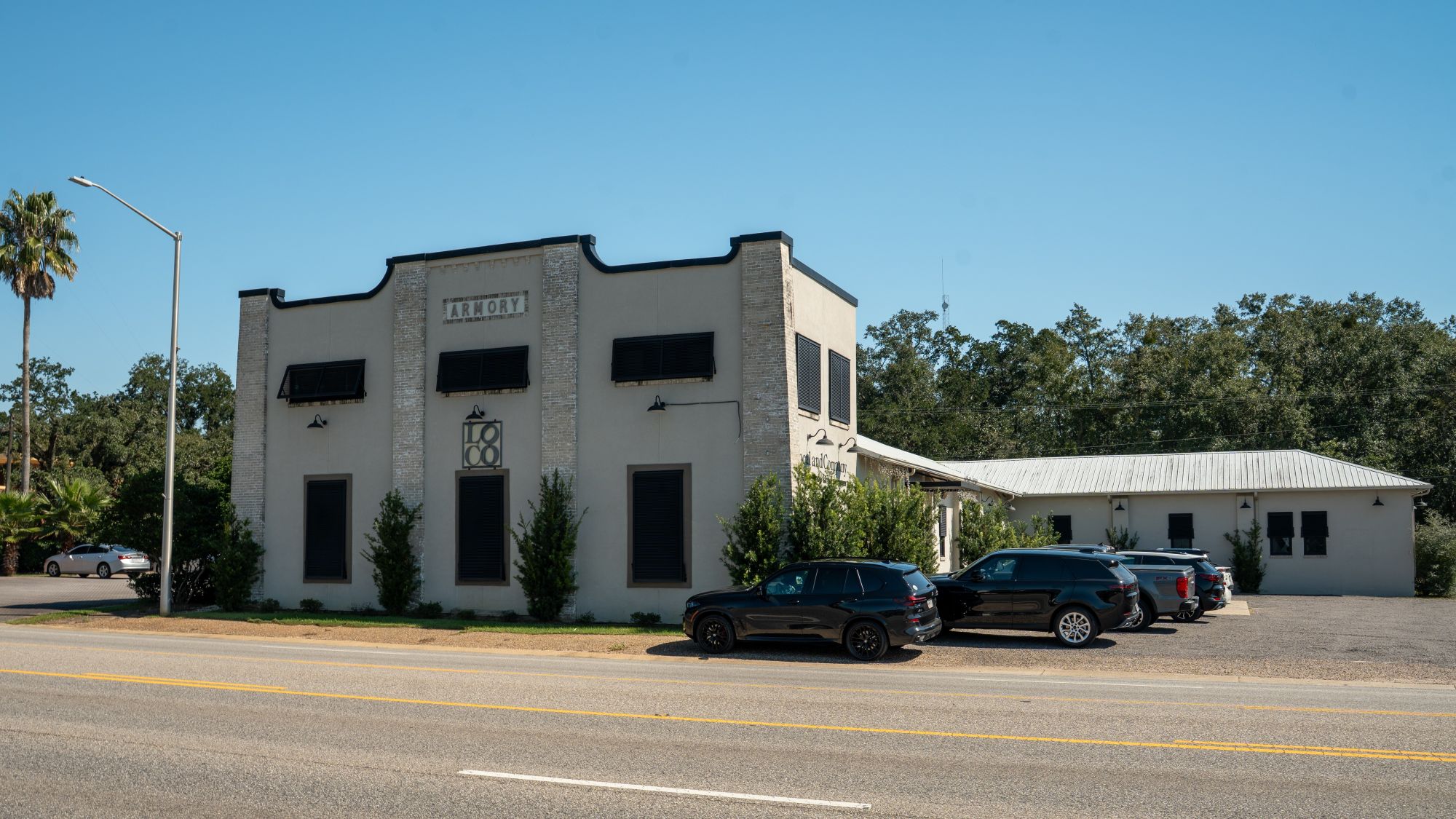
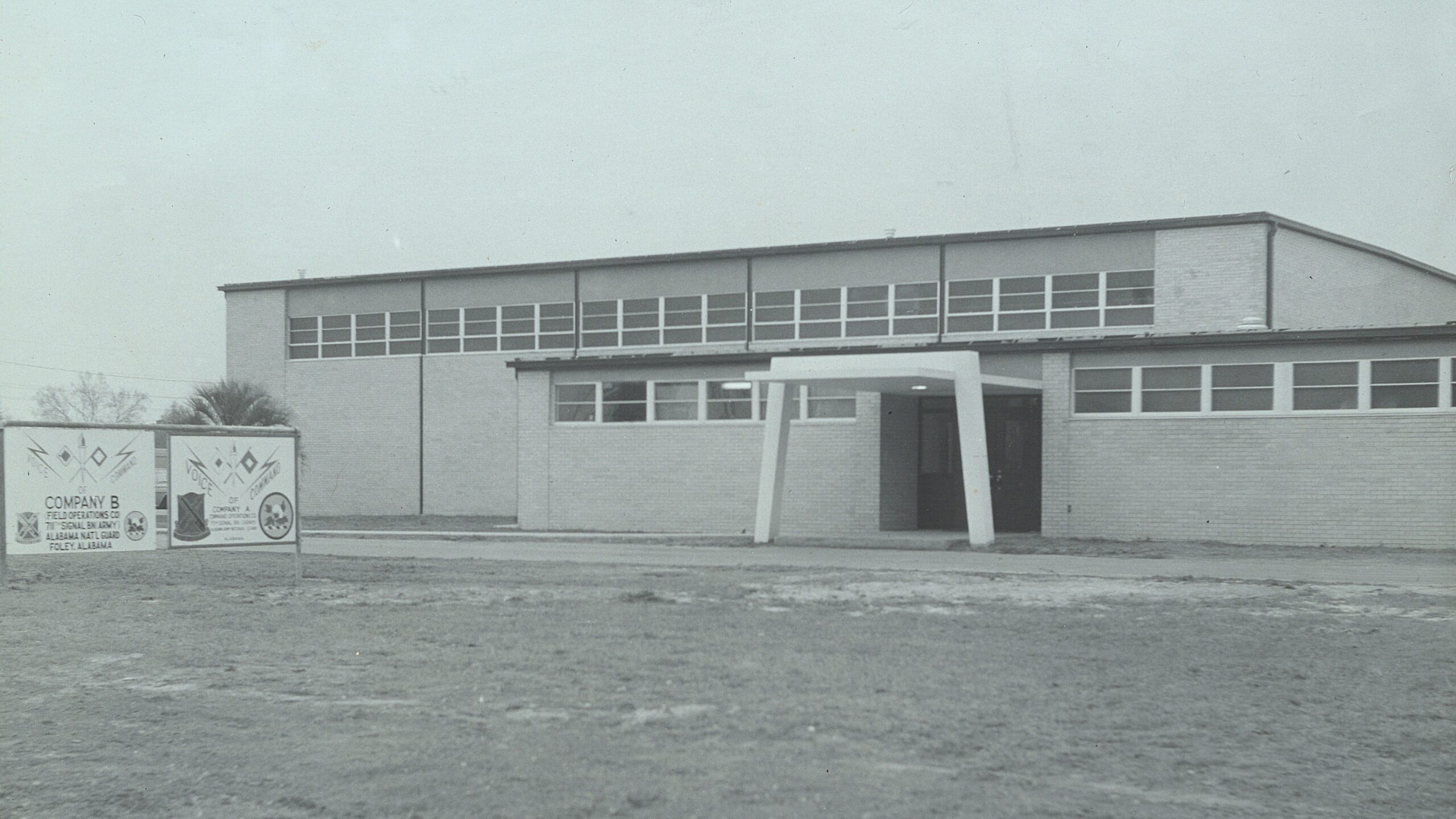
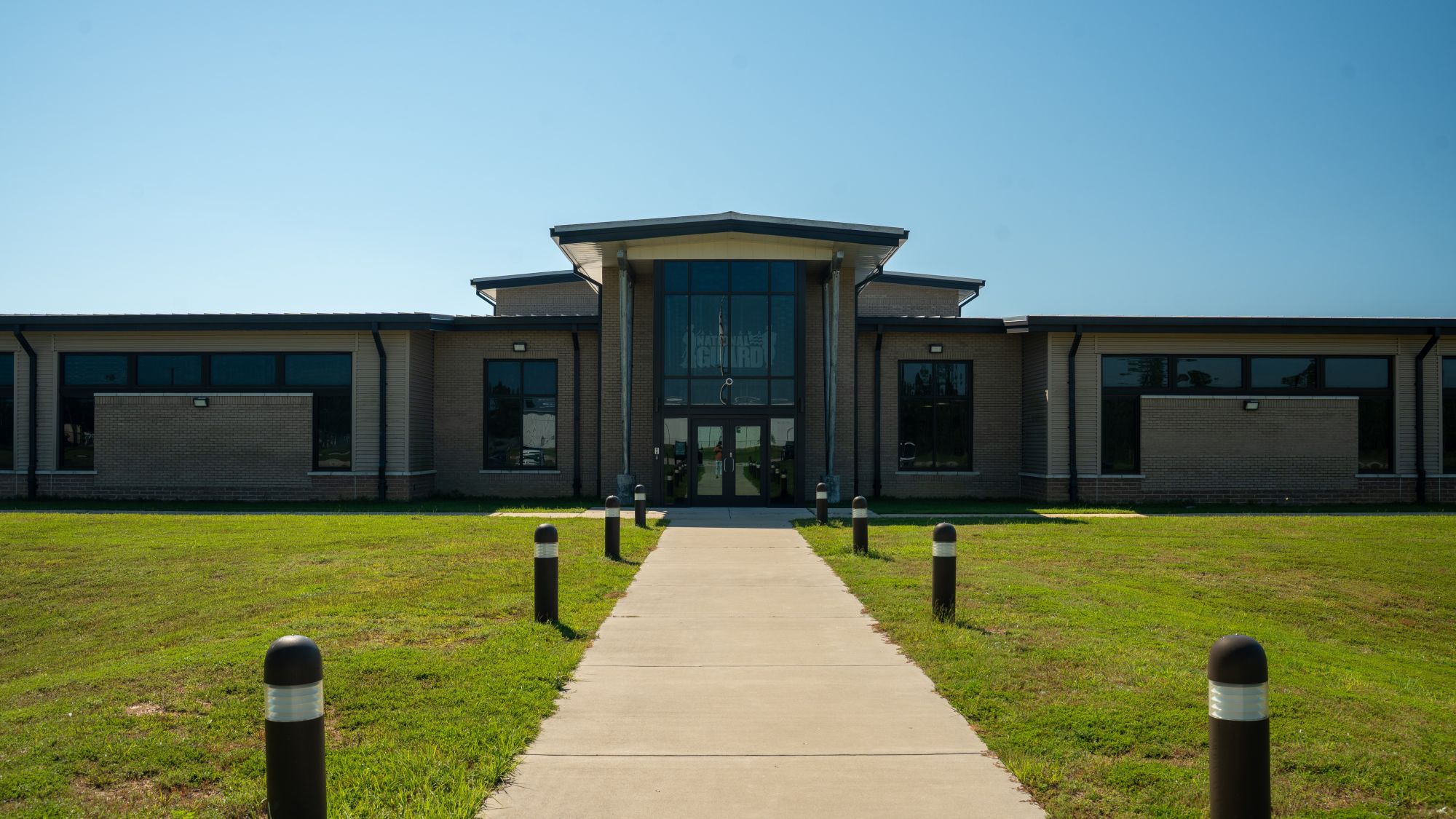
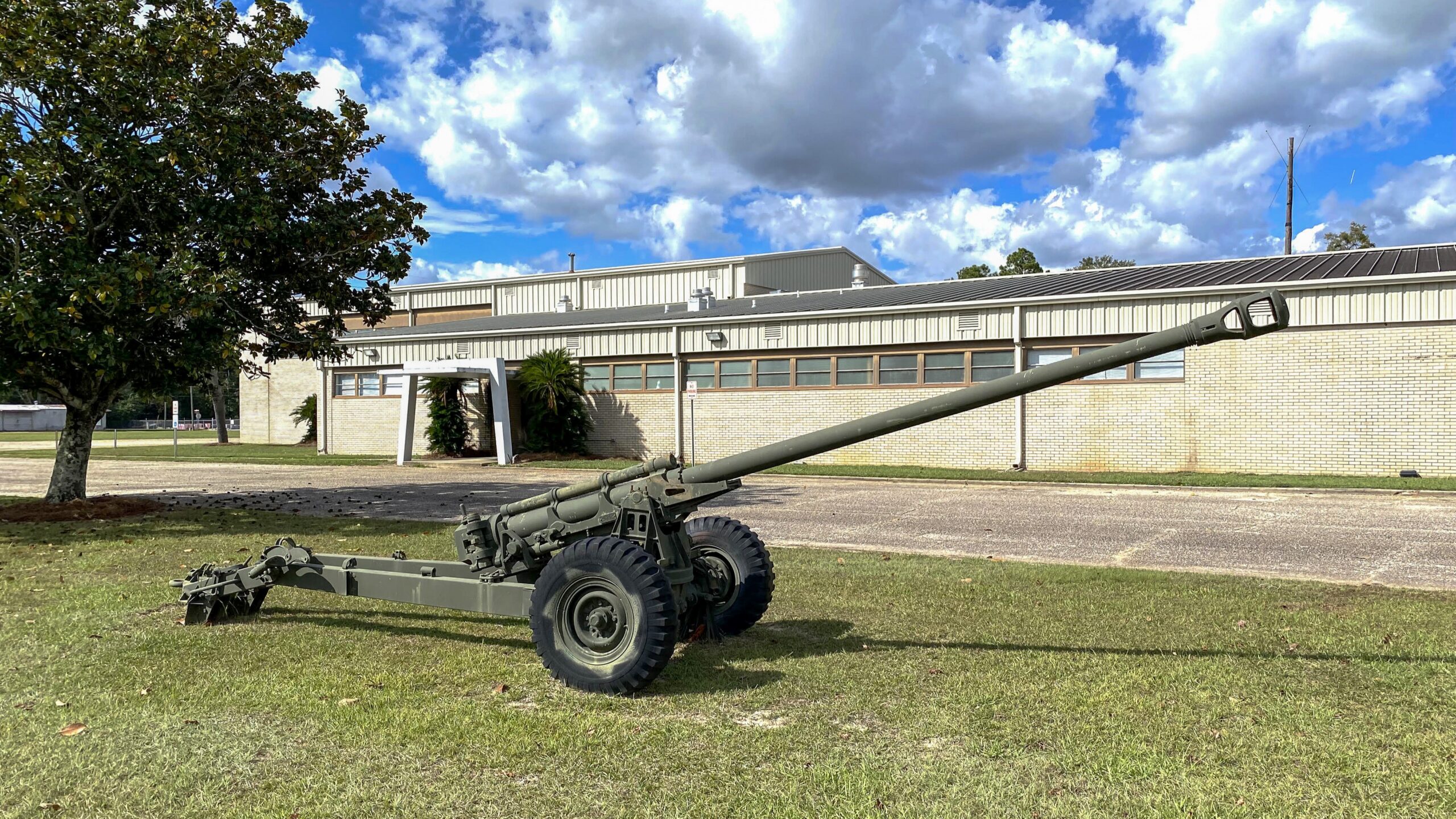
Two familiar Foley buildings share a history of military service. Before becoming the Foley Activity Center, the building on East Jessamine Avenue served as a National Guard armory for more than five decades. Just a few blocks away, the building now home to Local and Company Food+Drink on North McKenzie Street served as Foley’s original National Guard armory.
The East Jessamine Avenue armory opened in 1969 and served local National Guard members until a new facility opened in 2023. During those 54 years, soldiers trained at the site, responded to hurricanes and prepared for deployments overseas, including to the Middle East in 2004.
The building’s history is part of a military tradition in Foley that dates back 100 years.
A century of National Guard service
Foley residents began efforts to organize a local National Guard unit in the 1920s. In 1926, the 106th Motorcycle Company of the 31st Division was established in Foley. The unit was officially mustered in at the Foley Motor Company.
Initially, the company had no designated armory for drills, equipment storage and other military activities.
In February 1930, the company moved from the Masonic building, now home to the South Baldwin Chamber of Commerce on North Alston Street, to a temporary location at the South Baldwin Wholesale Company warehouse on North McKenzie Street.
Community members and local officials soon began working toward a permanent facility. The town purchased property on North McKenzie Street, and plans were developed for a 50-foot-by-150-foot building with a two-story front.
Construction was delayed by funding challenges during the Great Depression, but the community’s efforts eventually paid off.
On June 27, 1935, more than 1,500 people attended the opening ceremony for Foley’s new National Guard armory.
The building quickly became more than a military facility. It also served as a community gathering place, hosting dances, balls, Red Cross blood drives and other activities.
Service during World War II and the Korean War
In November 1940, more than 50 Foley National Guard soldiers were called to active duty, more than a year before the United States entered World War II.
Among those called to serve was Foley Mayor Frank V. Barchard Jr., who was also the publisher and editor of The Onlooker newspaper.
During World War II, the Army determined that motorcycle units, originally organized to carry messages and dispatches, were no longer as necessary. Members of Foley’s company were reassigned to other military units.
While local National Guard members served on active duty, the Foley armory became home to the 55th Company, 7th District Southern Area of the Alabama State Guard. The State Guard was organized to carry out National Guard responsibilities while those units were activated for federal service.
Foley’s contributions during World War II extended beyond its National Guard members. The community also served as the location of Barin Field, a major Navy aviation training center.
In recognition of the community’s wartime contributions, the National Park Service later designated Foley as an American World War II Heritage City.
Following the war, the Alabama National Guard organized Company G, 200th Regiment of the 31st Infantry Division, with headquarters at the Foley armory.
On Jan. 16, 1951, Company G and the rest of the 31st Infantry Division were called to active duty during the Korean War.
Members were assigned to various duties, including Sgt. 1st Class William L. Smith of Foley, who was sent to Korea.
On Nov. 4, 1951, just nine days before his 20th birthday, Smith was killed in action while leading a charge near Kumhwa, Korea. He was posthumously awarded the Distinguished Service Cross.
A 1948 graduate of Foley High School, Smith had been a halfback for the Foley Lions and a three-time letterman. He joined the National Guard at age 16.
In 1953, Company G was reorganized and returned to the Foley armory.
The local unit was later redesignated as Company A of the 711th Signal Battalion, with responsibilities including radio relay, telephone repeater and wire operations, along with message center functions.
A new armory on East Jessamine Avenue
By the 1960s, Foley’s original armory could no longer accommodate the needs of the National Guard, prompting plans for a new facility on East Jessamine Avenue.
In August 1969, Company A and the headquarters detachment of Company B of the 711th Signal Battalion moved into the new armory.
The building was formally dedicated in January 1970 and designated Fort William L. Smith in honor of the Foley soldier who lost his life during the Korean War.
The East Jessamine Avenue armory continued serving the National Guard and the South Baldwin County community for the next 53 years.
In 2004, the Foley National Guard unit stationed at the armory was called to active duty and deployed to the Middle East.
Meanwhile, the original 1935 armory on North McKenzie Street is also still in use today. After serving as an antiques mall, the building became home to Local and Company Food+Drink.
Continuing a tradition of service
As the needs of the Alabama National Guard continued to grow, plans for a larger, more modern Foley armory became a priority in 2009.
The new facility, with more than 30,000 square feet of space, was dedicated in 2023.
In addition to supporting National Guard operations, the modern armory is designed to serve as a staging area for emergency response and recovery efforts, including operations following hurricanes.
The City of Foley provided the property for the new armory in exchange for the former National Guard facility on East Jessamine Avenue, located behind City Hall.
That building has since been renovated into the Foley Activity Center, providing recreation space and offices for city departments.
From the original armory built in 1935 to the modern facility dedicated in 2023, Foley’s National Guard buildings reflect a century of military service, community involvement and continued public use.