


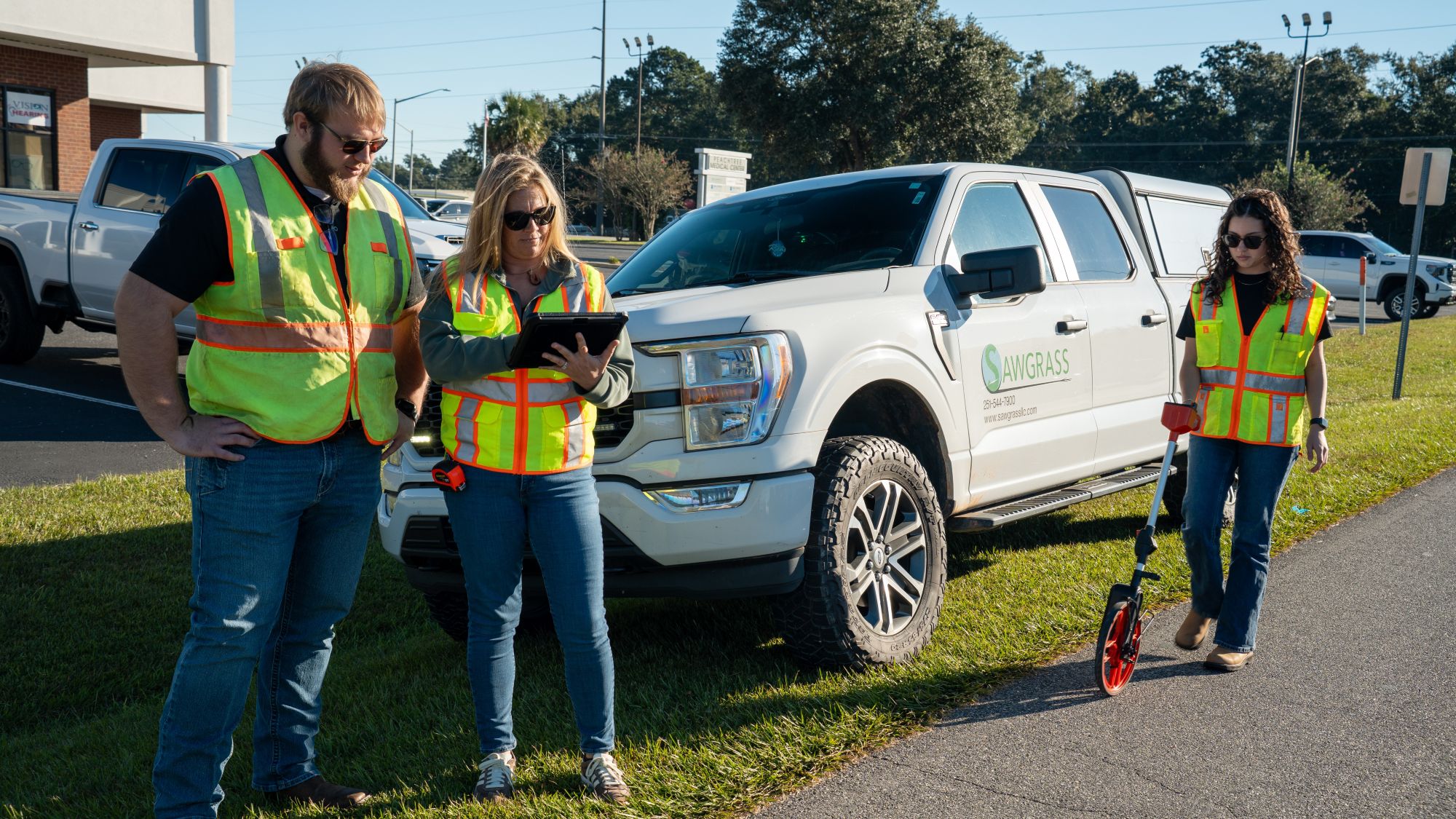
Work is beginning on improvements to streets throughout Foley as the city launches its annual resurfacing program and a comprehensive assessment of roadway conditions.
The Foley City Council approved plans to resurface 6.3 miles of city streets. The project includes improvements to Park Avenue between South Hickory Street and South Pine Street, Lakeview Drive from Carnoustie Drive to Baldwin County 12, and West Peachtree Avenue from North Cedar Street to Alabama 59.
In addition to the resurfacing work, Foley is beginning its most extensive assessment of city road conditions to help plan future improvements.
Under a plan approved by the City Council, Sawgrass Consulting will evaluate 210 miles of municipal streets and 9 miles of alleys. The study, known as a Pavement Condition Index (PCI), will help city officials identify which roadways need resurfacing and other improvements each year.
Foley City Engineer Taylor Davis said the city’s last PCI assessment was completed in 2019. He said the assessments should be conducted approximately every seven years.
“With the changes in Foley, it’s time to update this plan,” Davis said.
The upcoming assessment will be the first to include city alleys in addition to streets. Each roadway will be evaluated using standard industry criteria and assigned a score from 0 to 100, with 100 representing a perfect score.
Unlike previous assessments, the new report will also be integrated into the city’s digital mapping system, allowing officials to track improvements and update road conditions as resurfacing projects are completed.
“We can actively update each section of road each year as we pave,” Davis said. “We will initially get a plan with color-coded roads, red, yellow, and green, green being best. Each time we pave a road, we can go in and make it green.”
The mapping system will provide a more accessible, up-to-date overview of road conditions throughout Foley.
“You can see something a little bit more transparent, a little easier to read,” Davis said.
Mayor Ralph Hellmich said Foley’s roads scored well in the 2019 assessment, with an average grade in the 80s. Maintaining those conditions remains a priority as the city continues to grow.
“We are in good shape. Our roads are in great shape. Our goal is to not allow that number to start trending downwards,” Hellmich said. “That’s why, over the years, we have increased the mileage that we have paved, which has also increased the amount of money we’ve spent.”
Hellmich said Foley has consistently invested more in road maintenance than the amount received through fuel taxes, which municipalities are required to use for transportation improvements.
“We’re striving to keep that number above 80, and that’s what we’ll find out in this grade program,” Hellmich said.
The city is also exploring new technology to analyze traffic volumes and patterns. Systems that use satellite and cellular technology can provide more detailed information than traditional manual traffic counters, helping officials better understand how roads are being used.
“Technology has changed so much in just the last seven years since we last did this,” Hellmich said. “This will give Taylor and his people more tools that they can use because our conditions are changing with new roads and traffic patterns.”